|
Contact Us |
Our People |
Our Facility |
Our Engines |
Links | Blog |
|---|
|
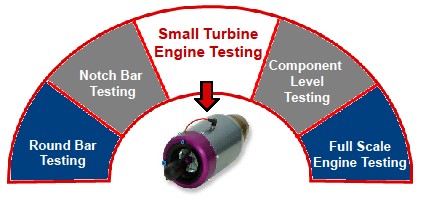
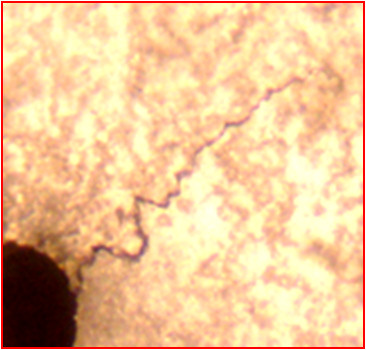
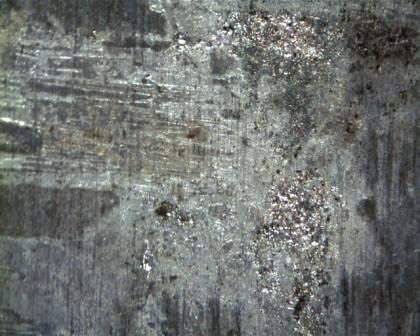
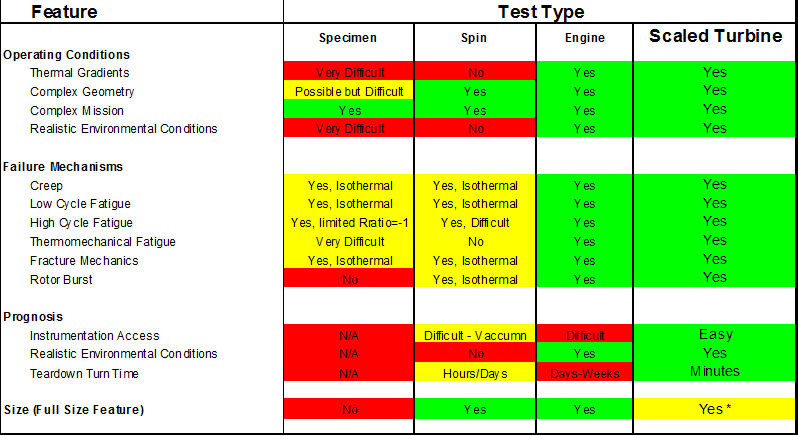
VEXTEC Laboratory Group's Small Gas Turbine Testing provides a cost-effective way of emulating many of the failure modes or other phenomena experienced in full scale gas turbine engines. By creating a similar operating environment, (high temperature and high rotating speeds), our patented rig greatly reduces test time and fuel burn by using scaled components and off the shelf JetCat P200SX engines. Our test environment has successfully recreated fatigue cracks, validated crack growth models, generated a statistically significant number of "failures" for Weibull distributions, replicated corrosion phenomena found in full scale engines and evaluated corrosion coatings, welds or other repairs and Test Instrumentation prior to installation in a full size engine. As shown in the chart on the left, small turbine testing fills the void between simplistic specimen testing & more expensive full size component & engine testing. |
|
Fatigue |
|
Corrosion |
|
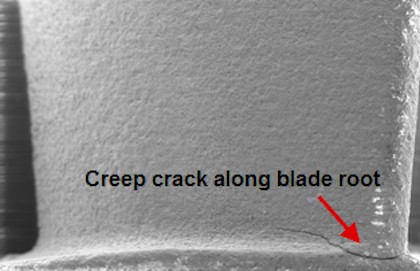
Creep |
|
|
|
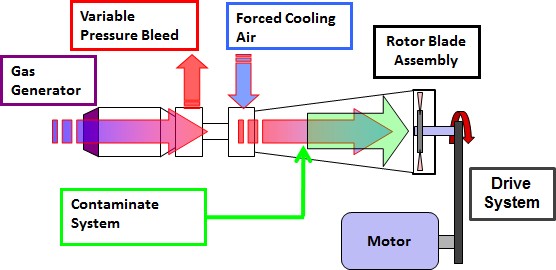
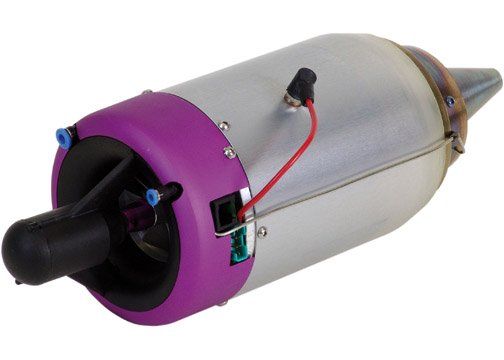
The JetCat P70 (shown at left) or the larger P200 (used when more air flow is needed)
functions as the gas generator and
provides the high temperature air flow needed for testing.
If temperatures higher than 1700F are required,
a propane fueled afterburner can be inserted directly after the
gas generator to provide temperatures up to 2700F.
Test articles (airfoils, rotors or blisks) are positioned behind the gas generator.
An electric motor is used to control the speed of the test stage.
The electric motor is capable of spinning a 10 inch diameter blisk at 50,000 RPM,
which yields a tip speed of 2,200 feet per second.
Additives (such as salt or sulfur) can be injected into the gas stream ahead of the test stage to simulate harsh operating environments. If the exhaust temperatures are higher than the desired test temperature, cooling air can be brought in to bring the temperature down. |
|
|
|
The advantages of scaled turbine testing are listed in the chart above.
Turnaround time is quick, as detailed to the right.
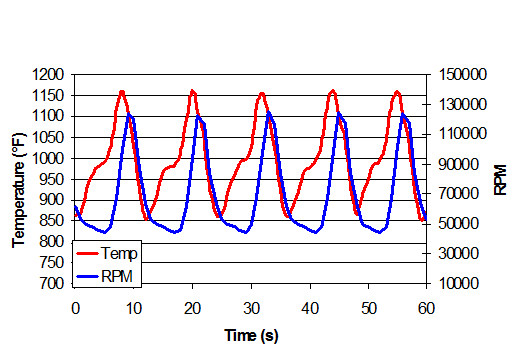
Missions can be very simple, as shown in the chart below,
or as complex as desired. RPM and gas temperature are recorded continuously.
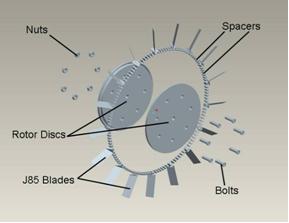
By using a split rotor design (lower right),
test airfoils can be inserted easily.
This makes it easy to do "rainbow" tests,
where a variety of items are tested simultaneously
(Perhaps a corrosion test with uncoated blades & several blades with
different anti-corrosion coatings).
|
Turnaround Time
|
|
|
| Small Gas Turbine Testing - Overview |
|---|
| Small Gas Turbine Testing - Corrosion |
| Small Gas Turbine Testing - Salt Fog |
| Service | Contract Numbers | Title | Years |
|---|---|---|---|
| Air Force |
FA-8650-06-M-5230
FA8650-07-C-5224 |
Three-Dimensional Nonlinear Structural Analysis Methods for Gas Turbine Engine Metallic components and Component Assemblies | 2006-2011 |
| Air Force |
FA-8650-07-M-2775
FA-8650-08-C-2850 |
Optimal Durability and Reliability Testing of Gas Turbine Components | 2007-2010 |
| Air Force | FA-8650-07-M-2767 | Integrally Bladed Rotor (IBR) Sustainment | 2007 |
|
VEXTEC Laboratoy Group 1033 South Hunt Street Terre Haute, IN 47803 |
America's Most Promising Company Forbes Magazine - October, 2009 |
|
E-mail epope@vextec.com |
||
|
URL http://gas-turbine-testing.com |
Phone 1-317-750-3414 Ed Pope |
Copyright © 2012 VEXTEC |
| About Us | Privacy Policy | Terms of Use |